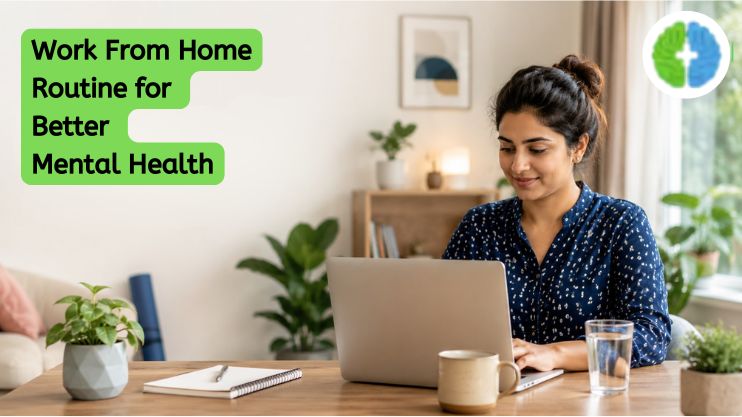
Stay Mentally Healthy While Working From Home: Expert Tips
Working from home can feel like freedom at first. No commute. More flexibility. Fewer interruptions. But after the novelty fades, many people notice a different problem: work spreads. The laptop is always nearby. Messages come late. Breaks disappear. Days blur together. You can be “at home” all day and still feel like you never really stop working.
The goal of remote working is not only productivity. It’s sustainability. Mental health stays stronger when your day has structure, boundaries, movement, and connection, even when your office is a few steps from your bed.
This article is educational and not medical advice.
Why Working From Home Can Be Mentally Draining
Remote work removes natural transitions. In an office, the commute creates a clear start and end. At home, the brain can struggle to switch modes. You may feel constantly “on,” which increases stress and burnout risk.
Isolation can also build quietly. Even if you like being alone, a lack of casual conversation can reduce motivation and mood. Screen-heavy days can strain attention, cause headaches, and leave you feeling mentally foggy by evening.
The solution isn’t to work harder. It’s to build a workday that includes recovery.
Create a Dedicated Workspace That Signals “Work Mode”
Your brain learns through association. If you work from your bed or couch, your mind starts blending rest with performance pressure. That makes it harder to relax and harder to sleep.
Create a specific workspace or home office, even if it’s a small table or a corner of a room. Try to keep it separate from where you sleep. When you sit there, you’re working. When you leave it, you’re off. This separation helps your nervous system feel safer.
If your home is small, use cues like a specific chair, a lamp you switch on only during work, or headphones you wear only for focused tasks. These cues can become a “mini office” for your brain.
Set a Schedule That Protects Your Life, Not Just Your Tasks
Working from home can accidentally turn into working all the time. A consistent schedule is one of the best mental health supports.
Start your day at a set time. End your day at a set time. Set healthy boundaries and build a realistic plan with breaks. This gives your brain predictability, and predictability reduces stress.
It also helps to communicate your working hours to family or roommates. Even a simple statement like “I’m available after 6 pm” reduces interruptions and resentment.
Build Transition Rituals That Replace the Commute
Without a commute, the brain needs another signal to switch modes and maintain the proper work-life balance. A transition ritual can be small but powerful.
Start-of-day rituals can include changing clothes, making tea, reviewing your top priorities, or sitting at your desk with intention. End-of-day rituals can include shutting down your laptop, writing tomorrow’s first task, and physically clearing your workspace.
Some people like a short walk, a shower, or a podcast as the “commute” that tells the brain work has ended. The goal is closure.
Take Real Breaks and Step Away From Screens
Remote working often removes natural breaks, so you have to schedule them intentionally. Short breaks protect attention and reduce mental fatigue.
Step away from the screen at least a few times a day. Stand up, stretch, drink water, or look outside. A real lunch break helps more than eating while answering emails.
If you find it hard to stop, use timers. A short break every hour can improve concentration and reduce irritability.
Move Your Body to Reduce Stress and Boost Energy
Movement is one of the most reliable tools for mood stability. Sitting all day increases tension and can worsen anxiety and restlessness.
You don’t need intense workouts. A short walk, light stretching, or a few minutes of mobility work can be enough to improve your physical health. Movement supports stress regulation, sleep, and focus.
If possible, get some daylight exposure. Natural light helps your body clock and can improve energy and mood.
Protect Sleep and Recovery Like It’s Part of Your Job
Remote working often increases late-night screen use, which can disrupt sleep. Poor sleep then worsens anxiety and focus, making work feel harder the next day.
Aim for 7 to 9 hours of sleep when possible. Create a wind-down routine. Keep your phone away from the bed if late-night scrolling is a habit. If you can’t sleep because your mind remains on “office mode”, writing down tomorrow’s first task can help reduce mental looping.
Sleep is not a luxury. It’s the foundation that keeps your emotional regulation intact.
Stay Connected to Reduce Isolation
Isolation is one of the biggest hidden challenges of remote work. You may not notice it until motivation drops or mood becomes flat.
Use video calls when possible so you see faces, not just text. Send short messages that mimic “watercooler chats.” Schedule a brief check-in with a colleague each week. Even small connection helps.
Outside work, prioritize real relationships. Call a friend. Meet someone for tea. Join a class or community activity. Human contact protects mental health more than most people admit.
Know When to Ask for Support
If you feel persistently overwhelmed, anxious, or low, don’t wait for burnout to become a crisis. Speak to your manager or HR if workload or expectations are unrealistic. Use mental health resources your company provides if available.
If symptoms persist, a mental health professional can help with stress management, anxiety coping, and boundary building. Support is not failure. It’s maintenance.
A Practical Closing Thought
“Work from home” is not only a location. It’s a system. When the system is designed well, you can be productive without sacrificing mental health. The key is structure, separation, movement, and connection, repeated daily.
For employed individuals feel stress while working from their Kolkata home, a trained psychiatrist like Dr. Mukherjee can offer medical or mental health care. If you are experiencing persistent anxiety, depression, sleep problems, or thoughts of self-harm, consult Dr. Sagnik, a qualified healthcare professional. Do not hesitate to reach out to our psychiatric clinic for any issue.

Dr. Sagnik Mukherjee is a highly regarded psychiatrist in Kolkata, bringing over a decade of experience in mental health to his practice. With a medical degree from Chittaranjan Hospital and an MD in psychiatry, his expertise spans adult psychiatry, geriatric psychiatry, child psychiatry, depression, anxiety-related disorders, and relationship issues. He has built a strong professional foundation, having worked at esteemed institutions such as Chittaranjan Hospital, SVS Medical College & Hospital, KPC Medical College, and Iris Hospital. His clinic is known for its advanced technology and state-of-the-art infrastructure, providing personalised mental health care, including medication management, individual and group therapy, and specialised services for substance abuse and eating disorders. His holistic approach takes into account lifestyle, diet, environment, and family dynamics when creating effective treatment plans. Additionally, he’s a respected TV speaker on social issues and offers online consultations for patient convenience, making him a trusted figure in the field of psychiatry in Kolkata.