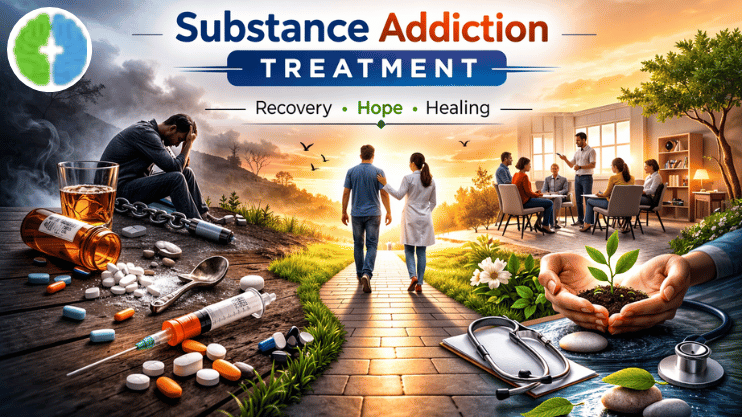
Substance Abuse Disorder: Signs, Symptoms, and Common Myths
Substance use problems rarely begin with a dramatic turning point. More often, they start quietly, as a way to cope with stress, loneliness, pain, sleep problems, or untreated mental illness. Over time, repeated use can change brain functions related to reward, motivation, stress response, and self-control. That is why someone can genuinely want to stop and still feel pulled back.
If you are reading this for yourself or for someone you care about, it helps to start with one grounding truth: substance use disorder is a medical condition, and medical treatment can help.
What Substance Use Disorder Means
You may hear “substance abuse disorder,” but many clinicians use “substance use disorder” (SUD). It describes a pattern of substance use that leads to impairment, distress, or harm. The focus is not on judging the person. The focus is on the impact on health, relationships, work or studies, safety, and quality of life.
SUD can involve alcohol, nicotine, cannabis, opioids, stimulants, sedatives, or other substances, including misused prescription medications.
Why Early Signs Are Easy to Miss
People often miss early SUD because the person may still be functioning at work, managing responsibilities, and appearing “normal.” High functioning does not mean low risk. It often means the struggle is hidden.
Another reason is overlap. Early SUD can look like burnout, anxiety, depression, irritability, relationship stress, or sleep deprivation. The clue is pattern and persistence: when the substance becomes the main tool for coping, the risk of escalation increases.
Signs and Symptoms in Real Life
SUD usually shows up as a cluster of changes rather than a single sign.
A common pattern is using more than intended. Someone plans “just one” and ends up repeating it. They may promise to cut back and then find themselves unable to follow through consistently.
Cravings can feel urgent and intrusive, as if the mind keeps circling back to the substance. Time and priorities can shift, with more effort spent obtaining, using, or recovering from the substance. Activities that used to matter may fade, and family members may notice disconnection, unreliability, or repeated conflicts.
You might also see increased risk-taking, including driving under the influence or mixing substances. Secrecy often grows, not always because the person wants to lie, but because shame and fear of consequences can take over.
Physical and emotional signs vary by substance, but may include changes in sleep, appetite, weight, energy, coordination, pupils, and mood. Tolerance can develop, meaning the person needs more to get the same effect. Withdrawal can occur when the substance wears off or is reduced, and withdrawal symptoms can be serious for some substances.
Side Effects and Safety Concerns People Don’t Talk About
Substances and misused medications can have side effects that affect both the body and the mind. These can include anxiety spikes, panic, irritability, depressed mood, memory and concentration problems, sexual dysfunction, and worsening sleep.
Mixing substances can be particularly dangerous. Even “small amounts” can become high-risk when combined with other drugs, alcohol, or certain prescriptions. If someone is experiencing severe withdrawal, confusion, hallucinations, seizures, breathing difficulty, chest pain, or suicidal thoughts, that is a medical emergency.
Substance Use Disorder and Mental Illness Often Overlap
SUD frequently co-occurs with mental health conditions. Sometimes people use substances to self-medicate anxiety, trauma symptoms, depression, or social fear. Sometimes substance use triggers or worsens mental illness. Either way, treating only one side of the problem often leaves the other side driving relapse.
A thorough evaluation can clarify whether the person is dealing with depression, anxiety, bipolar disorder, trauma-related symptoms, ADHD, psychosis, or other conditions, and what treatment plan fits best.
What Effective Medical Treatment Can Look Like
Recovery is not one-size-fits-all, and it is not limited to rehab. For many people, it involves a combination of medical care, psychotherapy, family support, and lifestyle changes.
Medical treatment may include supervised withdrawal management when needed, treatment for co-occurring mental illness, and medications that reduce cravings or prevent relapse for specific substances. Therapy may include cognitive-behavioral approaches, motivational work, trauma-informed care, and family-based interventions. Many people benefit from structured follow-up because recovery is built through repetition and support, not a single breakthrough moment.
Herbal Products and “Natural Cures” Deserve Caution
Some people try Herbal products marketed as detox or “addiction cures.” While certain supplements may support general health, they are not a substitute for evidence-based addiction care, and they can still cause side effects or interact dangerously with medications.
If someone is in withdrawal, has severe cravings, or has a history of overdose or suicide attempts, the safest path is professional care, not self-directed detox kits.
Environmental Factors, Genetics, and the Bigger Picture
SUD is influenced by multiple factors. Environmental factors can include chronic stress, trauma, adverse childhood experiences, peer influence, easy access to substances, and social isolation.
Biology also matters. Some people have inherited vulnerability, and researchers often describe risk in terms of genetic changes and brain circuitry adaptations over time. This does not mean fate. It means the playing field is different for different people, and stigma is the wrong tool for a condition shaped by biology, experience, and context.
Common Myths About Addiction That Keep People Stuck
Myths delay help and add shame. Clearing them up can change outcomes.
One of the biggest myths is that addiction is just a lack of willpower. Many people with SUD have strong values and strong effort. The disorder involves changes in brain functions that make stopping harder, especially under stress.
Another common myth is that prescription medications are always safe and non-addictive. Some are habit-forming, and misuse can happen gradually, even in people who never intended to develop dependence.
A third myth is that occasional use is harmless. Risk depends on dose, frequency, mixing, mental illness, family history, and context. Occasional use can still become risky if it becomes the main coping strategy.
You may also hear misleading claims about “causes” of addiction that do not hold up medically, such as blaming Human Papillomavirus, Helicobacter pylori, artificial sweeteners, or cell phones. These topics come up because misinformation spreads easily, but they are not considered direct causes of substance use disorder. When someone is struggling, it’s more helpful to focus on real risk factors like stress, trauma, environmental factors, co-occurring mental illness, and access to treatment. For confidential addiction-related consultation, you can visit our trusted psychiatric clinic in Kolkata.
Digital Life: Social Pressure, Access, and Online Risks
Modern substance use can be shaped by what happens online. Social media can normalize heavy drinking or drug use, intensify comparison stress, and expose people to risky content. It can also become a channel for illegal purchasing or coercion.
If you are supporting someone in recovery, digital boundaries can be part of the plan. Sometimes people need practical account protections if they are being pressured or scammed. In rare situations involving harassment or scams, families may consider a basic security service or security solution to reduce exposure and improve account safety. If there are threats or fraud, document it and seek appropriate help, including reporting and local legal guidance. Online attacks are not the root cause of addiction, but they can worsen the risk for someone already vulnerable.
How to Support Someone Without Enabling
If you’re a family member, aim for firm compassion. Stay emotionally connected, encourage evaluation, and set boundaries that protect the household. Avoid shaming language. Shame drives secrecy, and secrecy makes treatment harder.
If you’re the person struggling, consider that needing help is not proof of weakness. It’s a sign you are responding to a medical condition with a medical solution.
Psychiatrists for Substance Use in Kolkata
Seek urgent medical care immediately if there are signs of overdose, severe withdrawal, confusion, seizures, breathing problems, loss of consciousness, chest pain, or suicidal thoughts. In those situations, going to an emergency department can be life-saving. Substance use problems need structured medical support from the best psychiatrist in Kolkata.
If you suspect substance use disorder, are experiencing withdrawal or side effects, or have safety concerns, consult a qualified healthcare professional promptly. If there is an emergency, seek immediate medical care. Substance abuse is not insurmountable. It can be overcome with the right help and ailments. Get in touch with Dr. Sagnik Mukherjee, an experienced psychiatrist in Kolkata, if you need help dealing with substance abuse.

Dr. Sagnik Mukherjee is a highly regarded psychiatrist in Kolkata, bringing over a decade of experience in mental health to his practice. With a medical degree from Chittaranjan Hospital and an MD in psychiatry, his expertise spans adult psychiatry, geriatric psychiatry, child psychiatry, depression, anxiety-related disorders, and relationship issues. He has built a strong professional foundation, having worked at esteemed institutions such as Chittaranjan Hospital, SVS Medical College & Hospital, KPC Medical College, and Iris Hospital. His clinic is known for its advanced technology and state-of-the-art infrastructure, providing personalised mental health care, including medication management, individual and group therapy, and specialised services for substance abuse and eating disorders. His holistic approach takes into account lifestyle, diet, environment, and family dynamics when creating effective treatment plans. Additionally, he’s a respected TV speaker on social issues and offers online consultations for patient convenience, making him a trusted figure in the field of psychiatry in Kolkata.